

Senior executives leverage board-level analytics and implement risk management frameworks to steer sustainable organizational performance.

Adapting the value chain to market volatility ensures business resilience and preserves a competitive advantage.

Building robust relationships with investors and partners secures long-term funding and ensures commercial viability.

Competitive & Market Intelligence
Developing scalable business models
Adapting a value proposition for the French market requires deep PESTEL analysis of local consumer behavior and regulatory frameworks. Aligning operational capabilities with regional demands ensures sustainable market entry and a strong competitive edge.
Success depends on anticipating industry shifts. Through competitive benchmarking and SWOT analysis, organizations identify opportunities from tech to manufacturing. A clear roadmap integrating resource allocation with KPIs allows firms to scale operations. This proactive go-to-market strategy transforms challenges into expansion avenues, ensuring resilience amid economic volatility.
Strategic Human Capital Management
Workforce development

Talent acquisition strategies
Recruiting top-tier professionals in hubs like Paris demands a compelling employer brand and efficient multi-channel sourcing.

Employee Engagement & Retention
Fostering a supportive culture boosts engagement, reduces turnover, and preserves institutional knowledge within the firm.

HR Regulatory Compliance
Adhering to the French Labor Code (Code du Travail) and its stipulations on working time protects against liabilities and penalties.

Continuous skills training
Personalized training pathways ensure teams master evolving technologies and industry best practices.
Creating an efficient and harmonious workspace
Office layout

Ergonomics: comfort first
Flexible workspace design supports hybrid work models and diverse team needs. This activity-based working approach enhances collaboration, boosts agility, and optimizes real estate operational expenditures (OpEx).

Natural light: energizing the space
Fostering employee well-being (QVT) is central. A workspace integrating smart building technology and biophilic design elements creates a healthy, productive, and attractive environment for retaining top talent.

Organization: gaining efficiency
A seamless digital workplace is crucial for efficiency. Unified communication platforms and collaborative tools streamline workflows, reduce information silos, and empower distributed teams to perform effectively.
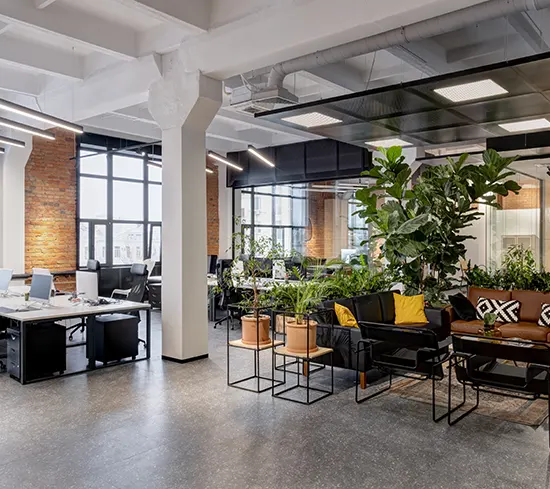
Atmosphere: an inspiring environment
An inspiring environment is built on a foundation of corporate culture. Fostering psychological safety and a sense of belonging are essential drivers of innovation, creativity, and overall workplace satisfaction.
Innovation and technology integration
Strategic Digital Transformation

AI-Powered Process Automation
Integrating machine learning models into workflows automates tasks, freeing staff for high-value strategic problem-solving.

Cybersecurity & Data Protection
Robust encryption, GDPR compliance protocols, and firewalls protect sensitive data from increasing digital threats and cyber-attacks.

Scalable Cloud Infrastructure
Migrating legacy systems to SaaS platforms enhances accessibility and facilitates secure remote collaboration for distributed teams.
Navigating Labor Law & Corporate Legal Affairs
Operating in France requires understanding the legal landscape, from employment contracts to collective bargaining agreements. Legal departments must engage the Comité Social et Économique (CSE) for mandatory consultations. Staying updated on jurisprudence mitigates litigation risks in dismissal or safety cases. A proactive legal risk management strategy shields corporate reputation and financial stability.
Financial health and fiscal control
Strategic Financial Optimization
Financial stability hinges on robust financial modeling and granular cash flow analysis. Optimizing working capital and capital allocation improves liquidity. Fiscal optimization strategies, like leveraging the Crédit d’Impôt Recherche (CIR), and internal audits secure long-term profitability.